

If you’ve seen Toy Story 5, you know Woody and Buzz have a new rival, and it’s not another toy. It’s a screen.
Screens have become a normal part of childhood. They can keep kids entertained during a long car ride, help families stay connected with loved ones, provide opportunities for learning, and even encourage movement and creativity. Like most things in life, screens aren’t inherently “good” or “bad.” What matters most is how, when, and why they are used. Just as we teach children healthy habits around sleep, nutrition, and exercise, we can also teach them healthy screen hygiene habits that support their cognitive, emotional, social, and physical development.
Research suggests that excessive or poorly timed screen use can contribute to emotional dysregulation, irritability, issues with focus and attention, and sleep disturbances. When screens begin to take the place of physical activity, face-to-face interaction, imaginative play, or other important experiences, children may miss out on opportunities that support healthy development. The goal is not to eliminate screens, it is to use them intentionally. This means looking beyond simply how much screen time children have and considering how, when, and why they are using screens.
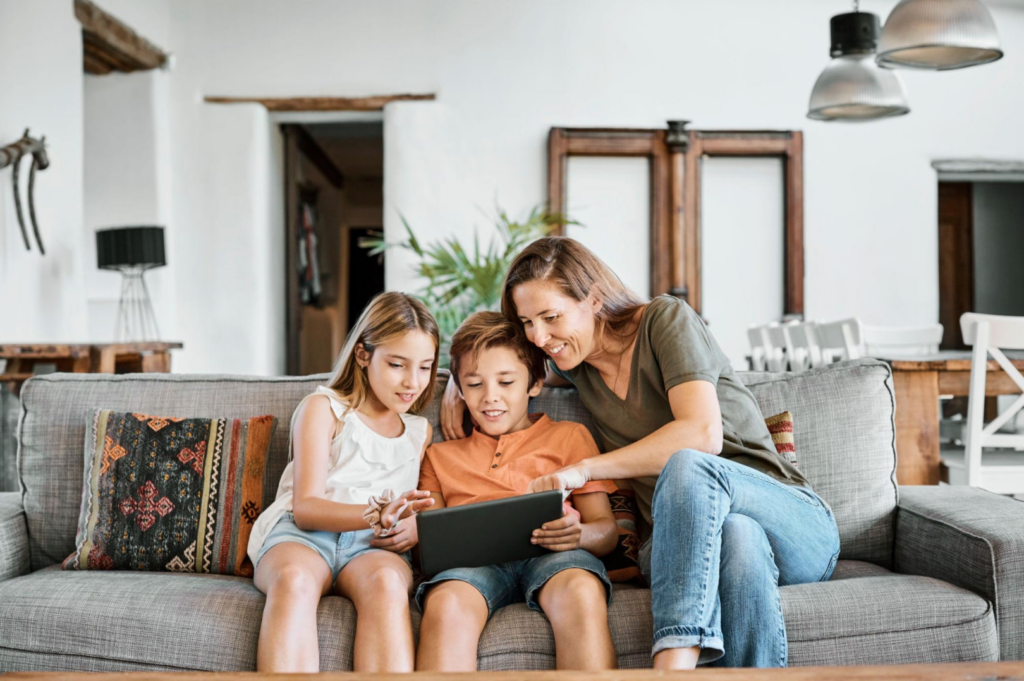
Watching an educational television program together as a family is very different from scrolling through endless short-form videos alone on a tablet. Video chatting with a grandparent, playing a creative video game, and watching a favorite show all involve screens, but they engage children in very different ways.
Shows That Support Healthy Development in Early Elementary Years
Many children’s programs are intentionally designed to teach important developmental skills while keeping kids engaged and entertained. Some examples include:
● Daniel Tiger’s Neighborhood – Helps children learn emotional regulation, empathy, coping skills, routines, and problem-solving through simple songs and repetition.
● Bluey – Encourages imaginative play, creativity, flexible thinking, resilience, and healthy family relationships. It also models parents repairing mistakes and engaging positively with their children.
● Sesame Street – Supports early literacy, kindness, inclusion, emotional awareness, and school readiness while introducing children to diverse communities and experiences.
● The Magic School Bus – Promotes curiosity, scientific thinking, and a love of learning by making science engaging and accessible.
● Wild Kratts – Encourages curiosity about animals, environmental awareness, teamwork, and critical thinking.
● Danny Go! – Gets children moving through dancing, jumping, balancing, and following multi-step directions. Active movement breaks can improve attention and help children regulate their energy.
Shows That Support Healthy Development in Mid-Late Elementary Years
As children get older, media can also provide opportunities to explore more complex themes related to identity, relationships, responsibility, problem-solving, and navigating challenges.
● Avatar the Last Airbender – Promotes empathy, friendship, responsibility, perseverance, handling conflict, identity, forgiveness, and understanding different perspectives.
● Just Add Magic – Supports problem-solving, teamwork, friendship, consequences of choices, communication, loyalty, and standing up for others.
● Babysitters Club – Promotes friendship, responsibility, independence, communication, empathy, conflict resolution, entrepreneurship, and navigating changing friendships.
● Fuller House – Encourages family connection, communication, coping with change/loss, responsibility, forgiveness, and supporting others.
● Percy Jackson – Promotes Friendship, courage, resilience, identity, teamwork, loyalty, overcoming challenges, and accepting differences.
● Mark Rober – Encourages curiosity, STEM learning, creativity, problem-solving, perseverance, experimentation, and using knowledge to help others.
Content Worth Monitoring
Not all screen content is created equally, and some popular children’s media may require additional parental guidance. Programs with extremely rapid scene changes, constant stimulation, or frequent advertisements may make it more difficult for some children to transition away from screens or engage in slower-paced activities afterward. It’s also important to consider the behaviors and messages children may take away from what they watch. Some examples parents may want to monitor include:
● Cocomelon – Fast pacing and frequent scene changes may be overstimulating for some young children.
● Peppa Pig – While entertaining, some children imitate Peppa’s bossy or disrespectful interactions.
● Caillou – Parents often report children copying whining or backtalk displayed by the main character.
● Ryan’s World – Heavy emphasis on toys and product promotion may encourage materialism rather than imaginative play.
● YouTube Shorts, TikTok-style videos, and endless scrolling platforms – Rapid, highly stimulating content can make it harder for children to sustain attention on slower activities and often lacks educational value.
The goal isn’t to label every show as “good” or “bad.” Instead, consider your individual child. Pay attention to how they behave during and after watching, what behaviors they imitate, and whether certain types of content seem to make transitions, sleep, attention, or emotional regulation more difficult.
What About Video Games?
Video games, like television, vary tremendously in their developmental impact. Games such as Minecraft, which encourage creativity, collaboration, and problem-solving, can provide meaningful opportunities for learning and exploration.
Parents may want to use additional caution with games that emphasize realistic violence or involve online interactions with strangers. First-person shooter games, for example, expose children to repeated violent imagery and may not be developmentally appropriate for younger players.
Platforms such as Roblox contain thousands of user-generated games. While many are appropriate for children, others may include frightening, mature, or violent content. Parental controls can be helpful, but they don’t replace active supervision.
Whenever possible, check age ratings, preview games before allowing your child to play, and join them occasionally. Playing together can help you better understand what your child is experiencing and create opportunities to talk about the content, characters, and interactions they encounter.
Building Healthy Screen Habits
Screen timing matters, and screen hygiene is about more than content. A few simple habits can help children develop a healthier relationship with technology:
● Create device-free spaces. For example,avoid screens during meals whenever possible to encourage conversation and family connection.
● Turn off screens 30–60 minutes before bedtime. Evening screen use, particularly on personal devices can delay melatonin release and interfere with falling asleep.
● Encourage screen-free play every day through outdoor activities, reading, imaginative play, crafts, or board games.
● Keep devices out of bedrooms overnight. Encourage children to charge phones, tablets, and other personal devices in a shared space, such as the kitchen or a parent’s bedroom. This can help reduce the temptation to use screens during the night and establish healthy sleep habits from an early age.
● Whenever possible, prioritize watching together on a shared television rather than isolated viewing on personal devices.
● Use parental locks and control to monitor your child’s screen usage and content.
● Create predictable screen routines.
● Model healthy screen habits yourself.
How Much Screen Time Is Recommended?
Screen time recommendations vary by age, child, and the type of content being used. Rather than focusing solely on a specific number of minutes, consider whether screen use is interfering with sleep, physical activity, family time, school responsibilities, friendships, or other important parts of your child’s day. For age-specific recommendations and guidance, visit the American Academy of Pediatrics.
Looking for more ideas? Social Thinking also offers helpful resources for families on navigating screens and building healthy digital habits. Check out their resource hub for additional tips and strategies.
Finding Balance, Not Perfection
At the end of the day, the goal isn’t to eliminate screens, but to help children use them in healthy, helpful, and meaningful ways. Building healthy screen habits takes time, consistency, and effort from the whole family. Remember, changes don’t have to happen all at once, even changing one habit can make a difference in your child’s mood and behavior. Small changes can add up to meaningful routines over time.
Most importantly, approach screen hygiene with flexibility rather than perfection. There will be busy days, long car rides, sick days, sleepovers, vacations, and other moments when a little extra screen time is exactly what your child or family needs. That’s okay.
With intentional choices, positive role modeling, and balanced habits, screens can be one part of a child’s life without taking over the things that matter most. Small, consistent changes can help support a more engaged, connected, and regulated kiddo.
You're not alone in your child's health and wellness journey. Together, we can create a path of renewal and hope.
privacy policy
all rights reserved
WAYZATA ADDRESS: 1907 Wayzata Boulevard E., Suite 100, Wayzata, MN 55391
612-787-2344
EDINA ADDRESS: 7301 Ohms Lane, Suite 195, Edina, MN 55439
612-787-2344


